Noticias
Editor del sitio
 Sitio
/subidas/imagen/63a3b3cddbde7.png
Determining the correct LED screen size requires matching display dimensions to audience viewing distance, content format, and installation space constraints. Incorrect sizing produces unreadable text, wasted investment, or structural incompatibility with the target venue.
Sitio
/subidas/imagen/63a3b3cddbde7.png
Determining the correct LED screen size requires matching display dimensions to audience viewing distance, content format, and installation space constraints. Incorrect sizing produces unreadable text, wasted investment, or structural incompatibility with the target venue.
What size LED screen do I need
Vistas: 53
Escrito por Editor del sitio
Hora de publicación: 2026-06-16
Origen: Sitio
Determining the correct LED screen size requires matching display dimensions to audience viewing distance, content format, and installation space constraints. Incorrect sizing produces unreadable text, wasted investment, or structural incompatibility with the target venue.
Viewing Distance and Screen Size Relationship
Viewing distance establishes the primary constraint for screen size. The minimum viewing distance determines the acceptable pixel pitch, which then defines required physical dimensions for readable content.
The relationship follows two rules. Pixel pitch multiplied by 1,000 yields the minimum comfortable viewing distance in meters. The screen diagonal should not exceed one-tenth of the maximum viewing distance for optimal visual coverage.
Close-Viewing Applications
Close-viewing scenarios include conference rooms, retail displays, and control rooms where the audience sits within 2 to 4 meters. These require pixel pitches of 1.2 to 2.5 mm, producing screen widths of 1.2 to 3.2 meters for 16:9 ratios.
Close-viewing screens prioritize text clarity over area coverage. A 1.86 mm pitch panel at 2 meters delivers crisp characters for data dashboards and presentations.
Long-Viewing Applications
Long-viewing scenarios include stadium boards, highway billboards, and auditorium backdrops where viewing occurs from 10 to 100 meters. Pixel pitches of 5 to 16 mm serve these distances, with widths from 4 to 20 meters depending on venue scale.
Long-viewing screens prioritize overall visual impact. Color uniformity and contrast ratio become more critical than individual pixel resolution at extended distances.
Step-by-Step Screen Size Calculation Process
-
Identify minimum and maximum viewing distances from the screen position to nearest and farthest audience seats. Record both in meters.
-
Determine the dominant content format. Text-heavy applications require finer pitch and larger dimensions per character. Video content tolerates coarser pitch at equivalent distances.
-
Select pixel pitch based on minimum viewing distance using: pixel pitch (mm) equals minimum viewing distance (m) multiplied by 1.0. Round up to nearest available specification.
-
Calculate minimum screen width for text readability using: minimum width (m) equals characters per line multiplied by character height (mm) divided by 1,000. Character height equals pixel pitch multiplied by 12.
-
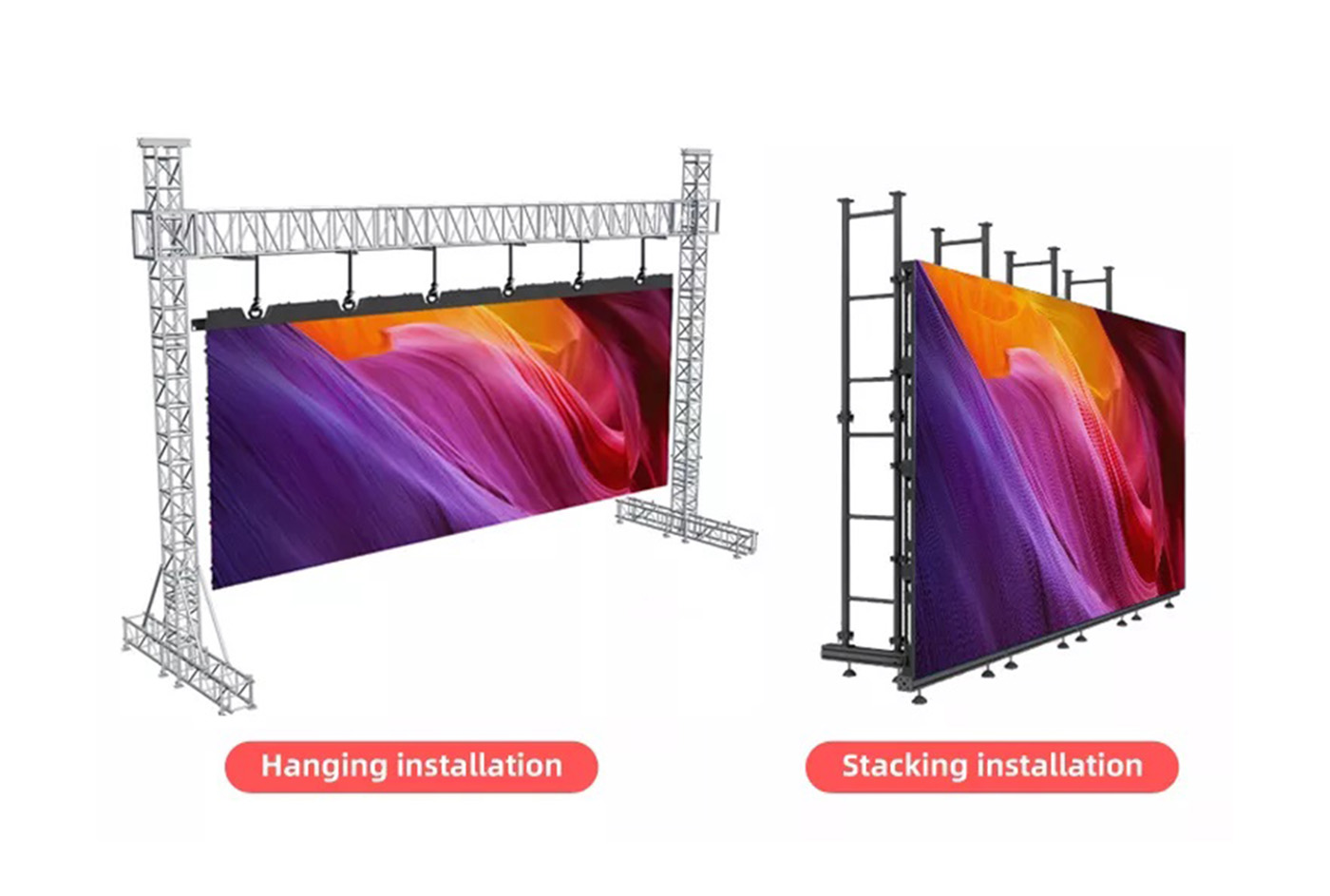
Calculate maximum screen size from installation space by measuring available wall width, ceiling height, and structural load capacity. Dimensions must fit within these boundaries.
-
Verify maximum viewing distance coverage by dividing screen diagonal by 0.1. If the result exceeds the actual maximum distance, the screen is oversized.
-
Confirm aspect ratio matches content requirements. Select 16:9 for video, 4:3 for data dashboards, or custom ratios for architectural integration.
Content Format and Sizing Requirements
-
Text-only displays need 12 to 16 pixels per character height for legibility. A 20-character line on a 3.91 mm pitch requires approximately 940 mm minimum width.
-
Mixed media displays combining text and video can use coarser pitch with larger areas. A 4:3 ratio at 4.81 mm pitch serves conference presentations at 5 meters.
-
Video-dominant displays prioritize contrast over pixel density. Screens below 6 mm pitch deliver broadcast-quality video at distances exceeding 6 meters.
-
Data dashboard displays require fine pitch for numeric readability. Financial dashboards use 1.2 to 1.86 mm pitch with widths of 1 to 3 meters.
LED Screen Size Selection Reference
|
Distancia de visualización
|
Tamaño de píxel
|
Minimum Width (16:9)
|
Recommended Diagonal
|
Aplicación
|
|
2 a 4 m
|
1.2 2.5 a mm
|
1.2 a 3.2 m
|
1.4 a 3.7 m
|
Conference, control room
|
|
4 a 8 m
|
2.5 4.81 a mm
|
2.5 a 5.0 m
|
2.9 a 5.8 m
|
Retail, showroom
|
|
8 a 15 m
|
4.81 6.67 a mm
|
4.0 a 8.0 m
|
4.6 a 9.2 m
|
Auditorium, church
|
|
15 a 30 m
|
6.67 10 a mm
|
6.0 a 12 m
|
6.9 a 13.9 m
|
Stadium, arena
|
|
30 a 100 m
|
10 16 a mm
|
8 a 20 m
|
9.2 a 23 m
|
Billboard, highway
|
Preguntas Frecuentes
How do I calculate screen size for a 50-seat conference room?
A 50-seat conference room has a maximum viewing distance of approximately 6 meters. A 4.81 mm pitch with a 2.5 to 3 meter wide 16:9 screen covers all seating positions with readable text and clear video.
What happens if I choose a screen larger than required?
An oversized screen at close distance wastes pixel pitch resolution and increases cost without proportional readability improvement. The audience perceives pixel structure below the pitch threshold, reducing perceived quality.
Does aspect ratio affect minimum screen size calculation?
Aspect ratio determines how width translates to content area. A 16:9 screen at 3 meters width provides 1.69 meters vertical height, while 4:3 at the same width provides 2.25 meters. Text-heavy applications benefit from taller ratios.
Can I use the same formula for outdoor and indoor installations?
The viewing distance formula applies to both environments. Outdoor installations require higher brightness and weatherproof enclosures, but the pixel pitch to distance relationship remains consistent across deployment scenarios.
What width is needed for displaying 20 lines of text?
Twenty text lines at 12 pixels per character height on 3.91 mm pitch require approximately 940 mm per line of 20 characters. Vertical height equals 20 multiplied by pitch multiplied by 12, yielding 940 mm with corresponding width based on aspect ratio.
Conclusión
LED screen size selection requires systematic calculation from viewing distance through pixel pitch to physical dimension verification against installation constraints. Content format, aspect ratio, and audience layout complete the sizing framework.
Hongwei LED delivers custom-sized LED display solutions with one-stop engineering support from dimension calculation through installation. Request a Rapid Sourcing Quote from Hongwei LED for your venue dimensions, or contact the Hongwei LED engineering team for free custom design support based on your audience seating layout.