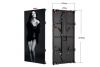
Choosing between renting and purchasing an LED display involves comparing total ownership cost against per-event rental expenditure. The decision depends on usage frequency, deployment duration, maintenance responsibility, and cash flow constraints.
Rental pricing follows a per-event or per-day model. Daily rental rates for commercial LED panels range from USD 80 to USD 200 per square meter, depending on pixel pitch and brightness specifications. Short-term events lasting 1 to 3 days incur lower total cost under rental terms.
Purchase pricing follows a one-time capital expenditure model. Commercial LED display panels cost between USD 400 to USD 1,200 per square meter at factory-direct pricing, with premium specifications pushing costs higher. The purchase eliminates recurring rental fees but requires upfront capital allocation.
Rental invoices include panel rental, transport, installation, on-site support, and dismantling. Ancillary fees for overnight setup, custom configuration, and damage insurance add 30 to 50 percent to base panel rates.
Rental providers maintain inventory across multiple pixel pitches. Customers select specifications per event without committing to a single configuration.
Purchase cost includes panel hardware, receiving cards, video processors, mounting structures, and installation. Annual maintenance adds 2 to 5 percent of purchase price. Power consumption contributes 0.5 to 1.5 kW per square meter during operation.
Purchase eliminates transportation and setup fees for recurring events at the same venue. Organizations using the display 6 or more times per year recover the purchase investment within 2 to 3 years compared to equivalent rental spending.
The break-point occurs when cumulative rental expenditure equals total purchase cost including installation and first-year maintenance. Beyond this threshold, each additional event generates net savings under the purchase model.
Calculate the break-event count using: break-event count equals total purchase cost divided by per-event rental cost. A USD 50,000 purchase against USD 8,000 per-event rental yields a break-point at 6.25 events.
Organizations deploying displays weekly or monthly exceed the break-point within 12 to 18 months. Purchase delivers financial advantage through eliminated rental fees and full configuration control.
Purchased panels allow permanent mounting, reducing setup time to zero for subsequent events. This efficiency compounds across the 50,000 to 100,000 hour lifespan.
Organizations deploying displays once or twice annually remain below the break-point. Rental avoids capital expenditure, maintenance responsibility, and storage costs between events.
Rental provides specification flexibility. Different venues demand different pixel pitches and brightness levels, which a single purchased configuration cannot serve efficiently.
유지비 accumulates at 2 to 5 percent annually of purchase price. Rental contracts transfer maintenance responsibility to the provider, eliminating this cost from the renter budget.
보관 및 보험 비용 apply to purchased panels between deployments. Climate-controlled storage for LED modules adds USD 500 to USD 2,000 annually depending on inventory volume.
Technology refresh cycle for purchased panels spans 5 to 7 years. Rental access to current-generation panels eliminates technology obsolescence risk.
Depreciation value of purchased hardware declines 15 to 20 percent per year. Rental fees remain constant regardless of technology age.
Power consumption cost at 0.5 to 1.5 kW per square meter accumulates across operating hours. Purchased displays operating 10+ hours daily generate significant electricity expenditure.
|
비용 범주 |
Rental (Per Event) |
Purchase (One-Time + Annual) |
|---|---|---|
|
Panel hardware |
USD 80 to 200/m² per day |
USD 400 to 1,200/m² one-time |
|
설치 노동 |
Included or USD 500 to 2,000 |
USD 2,000 to 8,000 one-time |
|
운송 |
USD 200 to 1,000 per event |
None for same-venue reuse |
|
기술 지원 |
Included in rental rate |
USD 1,000 to 3,000 per year |
|
유지보수 |
Provider responsibility |
2 to 5% of purchase annually |
|
Storage between events |
Provider responsibility |
USD 500 to 2,000 annually |
|
Break-event threshold |
N/A |
6 to 8 events for typical specs |
|
Lifespan utilization |
Per event only |
총 50,000~100,000시간 |
Purchasing becomes cheaper when cumulative rental fees exceed total purchase cost plus first-year maintenance. For typical specifications, this occurs at 6 to 8 events. Organizations with weekly or monthly deployments reach this threshold within 12 to 18 months.
Rental provides access to premium pixel pitch and brightness specifications without the full capital commitment. A USD 15,000 per-event rental for a 2.5 mm pitch panel serves a specific high-profile event, while purchasing at that specification requires USD 80,000+ upfront.
Rental contracts include on-site technical support and immediate panel replacement for hardware failures. The provider absorbs all repair costs and downtime risk. Purchased panels require the owner to coordinate repairs, source spare modules, and manage downtime independently.
Peak season rental rates increase 20 to 40 percent during major trade show periods and holiday event seasons. Organizations with flexible scheduling can reduce rental costs by booking during off-peak periods. Purchase pricing remains unaffected by seasonal demand fluctuations.
Common hidden costs include overnight setup fees, custom content configuration charges, damage insurance premiums, and early dismantling penalties. Review the full rental agreement terms before committing to ensure the quoted rate reflects total per-event expenditure.
The rental versus purchase decision for LED displays follows a clear financial framework. Organizations exceeding the break-event threshold benefit from purchase through eliminated recurring fees and full operational control. Low-frequency deployments gain from rental flexibility and zero maintenance responsibility.
Hongwei LED supplies both rental-grade and permanent installation LED display panels at factory-direct pricing. Request a Rapid Sourcing Quote from Hongwei LED to compare purchase versus rental economics for your deployment schedule, or contact the Hongwei LED engineering team for free custom configuration support matching your event specifications.
사이트를 계속 사용하면 다음 내용에 동의하게 됩니다. 개인 정보 보호 정책 이용약관.