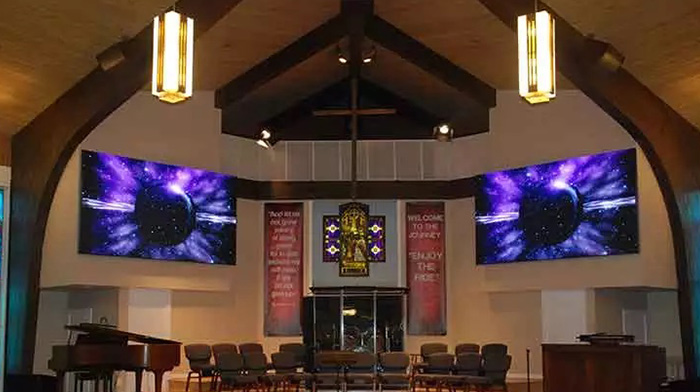
As churches continue to embrace modern audio-visual technology, LED screens have become an essential tool for enhancing worship services. From displaying song lyrics and sermon scriptures to supporting live streaming and visual storytelling, a well-chosen church LED screen can significantly improve visibility, engagement, and the overall worship experience.
However, selecting the right LED screen for a church is not the same as choosing a commercial advertising display. Churches have unique requirements related to viewing comfort, aesthetics, budget, installation safety, and long-term reliability. This guide explains how to choose a church LED screen step by step, helping church leaders, AV teams, and integrators make informed decisions.
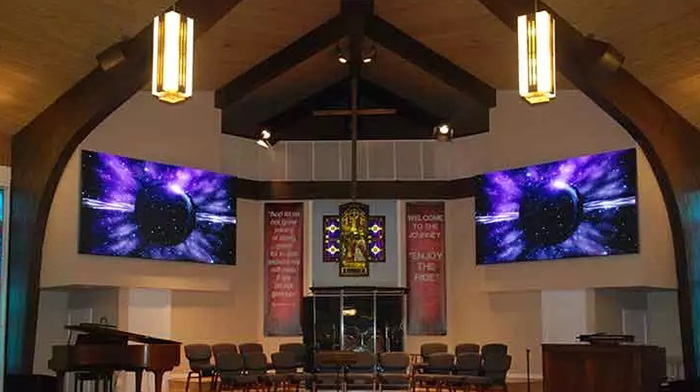
Traditional projectors have long been used in churches, but LED display technology offers several clear advantages:
Higher brightness and contrast, even in well-lit sanctuaries
Clear visibility from all seating areas
No shadowing or washed-out images
Long lifespan and low maintenance
Flexible screen sizes and shapes
Modern church LED display screens allow congregations to follow lyrics, scriptures, announcements, and multimedia content more easily, helping worshippers stay focused and engaged.
In addition, LED screens support high-quality live streaming and recording, which is increasingly important for churches reaching remote or online audiences.
Before selecting specifications, it is essential to understand how and where the LED screen will be used.
Main sanctuary stage backdrop
Side screens for lyrics and scripture
Fellowship halls or youth rooms
Church lobbies and information areas
Content Types
Worship song lyrics
Bible verses and sermon notes
Live camera feeds
Background videos and graphics
A church LED video wall used as a main stage backdrop has different requirements from smaller side displays. Defining the application scenario ensures the screen size, resolution, and brightness are appropriate for the space.
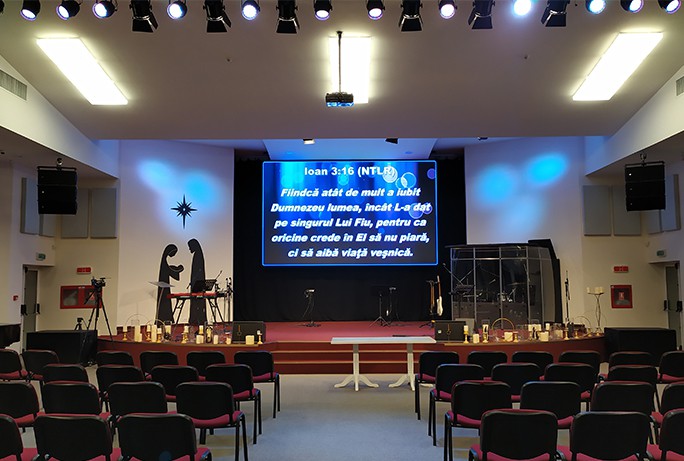
Pixel pitch is one of the most important technical factors when choosing an indoor LED screen for church use.
Pixel pitch refers to the distance between two adjacent pixels, measured in millimeters (e.g., P1.8, P2.5, P3).
Smaller pixel pitch = higher resolution
Suitable for closer viewing distances
Most churches are indoor environments with relatively close viewing distances. Common choices include:
P1.8 – P2.5 for medium to large churches
P2.5 – P3 for smaller churches or side screens
Choosing too large a pixel pitch can result in visible pixels and reduced clarity, while extremely fine pitch may exceed the actual needs and budget of the church.
Screen size should be based on:
Sanctuary width and height
Seating distance
Stage design and aesthetics
A professional layout plan helps ensure the church LED video wall is large enough to be visible without overwhelming the worship space.
Unlike outdoor LED screens, church LED screens do not require extremely high brightness.
Typical indoor church LED screens: 600–1,200 nits
Adjustable brightness is essential for different lighting conditions
Excessive brightness can cause eye fatigue and distract worshippers, so brightness control is critical.
High contrast ratio for clear text and scripture
Accurate color reproduction for natural visuals
High refresh rate for flicker-free performance (important for cameras and live streaming)
An eye-friendly, stable image is far more important in churches than aggressive visual impact.
Installation method directly affects safety, maintenance, and visual integration with church architecture.
Wall-mounted LED screens: Clean and space-saving
Hanging or suspended screens: Suitable for large sanctuaries
Built-in stage backdrop LED video walls
Front-service LED screens allow maintenance from the front, ideal when rear access space is limited.
Rear-service designs require access behind the screen but may reduce cost.
Church buildings often have structural limitations. Cabinet weight, mounting frames, and load-bearing capacity must be carefully evaluated to ensure safety.
A church LED screen should be easy to operate for volunteers and AV teams.
Simple and intuitive control software
Compatibility with cameras, laptops, and live streaming equipment
Multiple input sources (HDMI, SDI, media players)
Easy content switching during services
Churches grow and technology evolves. Choosing a flexible LED control system allows future expansion, additional screens, or upgraded video processing without replacing the entire system.
Church budgets must balance cost with long-term value.
Initial purchase cost
Installation and structural work
Control system and accessories
Cheaper LED screens may save money upfront but often result in higher maintenance costs and shorter lifespan.
High-quality LED components ensure:
Stable long-term performance
Consistent brightness and color
Reduced failure rates
Front-access maintenance reduces downtime
Clear warranty terms and technical support are essential
Reliable after-sales service ensures peace of mind
A church LED display is a long-term investment, not a short-term expense.
Choosing the right church LED screen requires more than comparing prices or screen sizes. Churches must consider worship environment, viewing comfort, pixel pitch, brightness, installation safety, and ease of operation. A well-designed LED display enhances worship without distracting from its spiritual focus.
By carefully evaluating application scenarios, technical specifications, and long-term reliability, churches can select an LED screen solution that supports meaningful worship experiences for years to come.
With 8 years of experience in the LED display industry, Hongwei LED provides professional one-stop solutions and complete LED video wall systems worldwide. From fine-pitch indoor LED screens for churches to customized LED display solutions in any size, shape, resolution, or installation type, Hongwei LED works closely with clients to design reliable, visually comfortable, and future-proof church LED screen systems tailored to each worship space’s unique needs.
By continuing to use the site you agree to our privacy policy Terms and Conditions.